Better Construction Outcomes Through BIM-Driven Estimating Accuracy
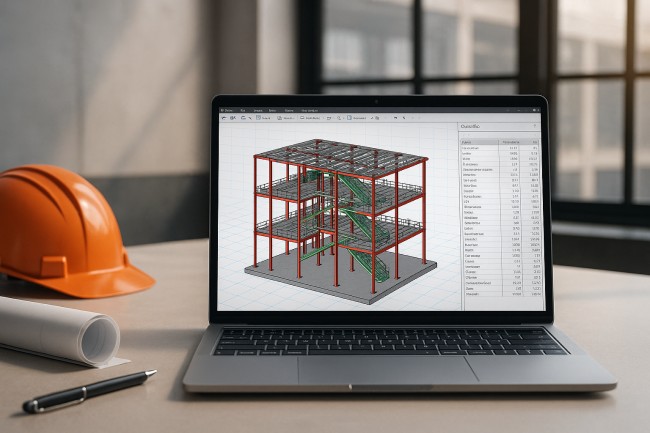
A missed measurement or a vague finish spec isn’t a small mistake — it’s a seed that grows into late orders, angry subcontractors, and wasted days. On projects that matter, small errors become expensive very quickly. The way teams avoid that cascade is straightforward: better inputs, clearer handoffs, and disciplined estimating. BIM Modeling Services give you a reliable starting point. When that data flows into skilled Construction Estimating Services and, where required, into Xactimate Estimating Services, the estimate becomes a working plan rather than a hopeful number.
You want outcomes that don’t surprise you. Start by cleaning up the beginning.
What a model must provide to be useful
Not every model is created equal. A pretty 3D view is great for marketing, but lousy for an estimator. For estimating accuracy, the model must be a source of measurable facts.
Non-negotiables:
- consistent family and element names across disciplines
- minimal metadata fields filled for key items (material, finish, thickness)
- agreed unit conventions (each, linear foot, square foot, cubic yard)
- Export formats that preserve data integrity (CSV, IFC)
When BIM Modeling Services deliver a file that follows those simple rules, estimators don’t fight the file. The price. The switch from data cleanup to decision-making is where you start to save money.
Quick practical note
Run a sanity check after export. Compare a hand count of a few line items to the exported totals. If they don’t match, fix it then. Too many teams leave that step until later — and it costs.
Mapping: small work, big payoff
You’ll hear mapping described as “administration.” Don’t be fooled. A maintained spreadsheet that links model element names to estimate line items is the most valuable file on a modern project.
A good mapping includes:
- Model label → estimate line code
- unit conversion rules, if any
- default labor or productivity assumptions
- short notes on finishes and exclusions
With mapping in place, Construction Estimating Services can import quantities quickly. The estimator’s time moves from clerical entry to judgment: choosing crew mixes, assessing access impacts, and setting realistic contingencies. That human judgment is where forecasts become trustworthy.
Why Xactimate matters for formal outcomes
Not every project needs the same finish. But many jobs — especially insurance-related work, claims, or formal owner reviews — benefit from a standardized, auditable output. That’s where Xactimate Estimating Services are practical. Xactimate breaks costs into consistent line items and ties them to local price libraries, which is why third-party reviewers often expect it.
Pair a clean model with Xactimate, and you get:
- A standardized document that reviewers read without translation.
- regional pricing reflecting market conditions;
- An auditable trail tying each line to a measurable quantity.
When BIM Modeling Services feed mapped quantities into Xactimate, the result is a defensible estimate. Approvals speed up. Disputes shrink.
A simple, repeatable workflow that reduces surprises
You don’t need an elaborate integration to get real gains. You need a loop that everyone follows.
Repeat this flow:
- Kickoff: set naming rules, minimal metadata, and export format;
- Model: BIM Modeling Services produce milestone exports.
- Map: update the mapping spreadsheet to link model labels to cost codes;
- Price: Construction Estimating Services import quantities, apply local rates, and test scenarios;
- Validate: reconcile totals with procurement and field leads before orders.
Do it at every milestone. The estimate becomes living data rather than an afterthought.
Real improvements you’ll notice quickly
The first wins are practical and visible on site and in the finance office.
Common early gains:
- Faster bid turnaround — automated takeoffs replace manual measures;
- Fewer change orders — scope is verified early;
- Smarter procurement — accurate counts reduce rush orders and waste;
- Better audit trails when Xactimate Estimating Services are part of the delivery.
Those wins compound. One tidy project produces templates and habits that reduce hours on the next one.
Fix the human problems before buying new tools.
Most trouble isn’t technical. It’s human: inconsistent names, skipped metadata, and exports that lose fields. These are governance problems, and they’re cheap to fix.
Do this first: Publish a two-page modeling guide and require it at kickoff.
- Use template families to avoid name drift.
- Store the mapping spreadsheet in a version-controlled share.
- Run a sample export soon after modeling starts to catch issues early.
Apply these, and your estimating team spends time on analysis, not cleanup.
Where people add value beyond the data
Models give you measurements. Tools give you formats. People give you context. Estimators bring market insight. Project managers understand sequencing. BIM coordinators keep naming honestly. That human layer turns model outputs into decisions that reflect real site conditions.
When BIM Modeling Services, Construction Estimating Services, and Xactimate Estimating Services are used together and respected, roles sharpen: estimators become analysts; coordinators maintain standards; managers plan with confidence.
Pilot, learn, scale
If you’re unsure, start small. Pick a short, representative project. Agree rules at kickoff. Export, map, import, reconcile. Document what you learned and tweak the mapping. Repeat. A tight pilot reveals friction points fast and gives you templates that save hours on the next job.
Pilot checklist:
- Project under three months.
- Naming and metadata rules agreed at kickoff;
- mapping prepared before the first export;
- Test imports and reconcile outputs with the field.
Final thought: accuracy is a habit, not a feature
Better construction outcomes aren’t the result of a single fancy tool. They come from consistent habits: clean models, maintained mapping, skilled estimating, and the right tools for formal outputs. BIM Modeling Services give you measured inputs. Construction Estimating Services add judgment and regional knowledge. Xactimate Estimating Services provide structured outputs when formality is required. Put these pieces together, and you’ll see fewer surprises, smarter procurement, and budgets that actually behave. That’s how projects move from chaos to control.