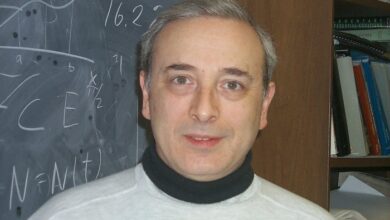
Eugenia Brin: The Inspiring Life of the Scientist, Philanthropist and Mother Behind a Remarkable Legacy

Eugenia Brin was an accomplished scientist, devoted philanthropist, and passionate advocate for Parkinson’s disease research. Although many people recognise her as the mother of Google co-founder Sergey Brin, her own achievements deserve equal attention. Her journey from the Soviet Union to the United States reflects determination, resilience, and a lifelong commitment to science and education.
Throughout her career, she contributed to climate and atmospheric research at NASA while supporting medical research, higher education, and charitable causes. Her work influenced countless lives, both through scientific discovery and generous philanthropy.
Table of Contents
ToggleEugenia Brin Early Life
Eugenia Brin was born on 19 August 1948 in Moscow, Soviet Union. She grew up during a period when political restrictions shaped many aspects of everyday life. As a Jewish citizen, she experienced discrimination that affected educational and professional opportunities.
Despite these challenges, she excelled academically from an early age. Her passion for mathematics and science became evident during her school years, laying the foundation for a distinguished scientific career. Her determination to pursue knowledge remained unwavering despite the barriers placed before her.
Eugenia Brin Education
Academic Excellence at Moscow State University
Education played a central role in Eugenia Brin’s life. She attended Moscow State University, one of the most respected institutions in the Soviet Union. She specialised in scientific research, developing strong analytical and mathematical skills that would later serve her well in her professional career. During her university years, she gained valuable experience in scientific methods, research techniques, and data analysis. These abilities later enabled her to contribute meaningfully to environmental and atmospheric science.
Immigration to the United States
A New Beginning
In 1979, Eugenia Brin and her family left the Soviet Union after receiving permission to emigrate. The family settled in the United States in search of greater academic freedom, professional opportunities, and a better future. Starting a new life in a different country was not easy. Learning a new culture while establishing professional careers required determination and resilience. The decision ultimately transformed the future of the entire family.
Eugenia Brin Career at NASA
Building a Successful Scientific Career
After arriving in America, Eugenia Brin established herself as a respected research scientist. She joined NASA’s Goddard Space Flight Center, where she spent many years conducting scientific research related to climate, weather, and atmospheric systems. Her responsibilities included analysing environmental data and contributing to projects that improved scientific understanding of Earth’s atmosphere. Working alongside leading researchers, she became known for her precision, dedication, and commitment to scientific excellence.
Although her work rarely attracted public attention, it formed part of important scientific efforts that supported environmental research and climate studies.
Contributions to Atmospheric Science
During her career, Eugenia Brin participated in research involving:
- Climate observations
- Atmospheric measurements
- Environmental data analysis
- Weather-related scientific studies
- Earth science research
Her work demonstrated the importance of careful scientific investigation in understanding the changing environment.
Family Life of Eugenia Brin
Marriage to Michael Brin
Eugenia Brin married Michael Brin, a distinguished mathematician and professor. Like Eugenia, Michael was born in the Soviet Union and later emigrated to the United States. Their shared passion for education, mathematics, and scientific thinking created a strong family environment centred on learning and intellectual curiosity. Together, they encouraged independent thinking and academic excellence.
Raising Sergey Brin
One of Eugenia Brin’s greatest achievements was helping raise Sergey Brin, who later co-founded Google. She inspired him through her love of mathematics, science, and education. The family’s emphasis on curiosity, problem-solving, and lifelong learning helped shape his future success. Although Sergey Brin became one of the world’s most influential technology entrepreneurs, he has often acknowledged the importance of his family’s educational values. The Brin household encouraged creativity while maintaining a strong respect for knowledge and hard work.
Eugenia Brin and Parkinson’s Disease
A Personal Challenge
During the late 1990s, Eugenia Brin received a diagnosis of Parkinson’s disease. Rather than allowing the condition to define her, she became an energetic advocate for research aimed at improving treatments and finding better therapies.
She believed that scientific progress offered hope for millions of people living with neurological disorders. Her personal experience motivated both her family and many research organisations to invest more heavily in Parkinson’s disease research.
Supporting Medical Research
Eugenia Brin became actively involved with organisations dedicated to Parkinson’s disease. She supported scientific collaboration between researchers, physicians, and medical institutions.
Her advocacy focused on:
- Advancing medical research
- Improving patient care
- Supporting scientific innovation
- Raising awareness of Parkinson’s disease
- Encouraging investment in new treatments
Her efforts extended well beyond financial contributions, reflecting genuine compassion for patients and families affected by the condition.
Philanthropy and Charitable Giving
Commitment to Education
Education remained one of Eugenia Brin’s lifelong priorities. Together with her husband, she donated substantial financial support to universities and educational programmes.
Their philanthropy helped strengthen:
- Mathematics education
- Computer science
- Environmental science
- Medical research
- Student scholarships
- Academic facilities
These contributions continue to benefit students and researchers across multiple disciplines.
Supporting Parkinson’s Research
One of the family’s most meaningful charitable initiatives focused on Parkinson’s disease. Significant donations helped establish specialised research programmes, academic positions, and medical centres dedicated to understanding movement disorders. These investments continue supporting scientific discoveries that may improve future treatments.
Encouraging Scientific Innovation
Throughout her life, Eugenia Brin believed scientific discovery could solve many of humanity’s greatest challenges.
Her charitable work reflected this belief by supporting institutions committed to:
- Scientific excellence
- Medical innovation
- Advanced research
- Public education
- Future generations of scientists
Her philanthropy created opportunities that will continue benefiting society for decades.
Eugenia Brin’s Personal Values
Dedication to Knowledge
Knowledge shaped every stage of Eugenia Brin’s life. She believed education opened doors regardless of background or circumstance. Her own experiences demonstrated how perseverance and learning could overcome extraordinary obstacles. This philosophy influenced both her family and the many institutions she supported.
Strength Through Adversity
Leaving the Soviet Union required courage. Building a scientific career in a new country required persistence. Facing Parkinson’s disease required resilience. Throughout each chapter of her life, Eugenia Brin demonstrated quiet strength and unwavering determination. Rather than seeking public recognition, she focused on meaningful contributions that improved the lives of others.
Lasting Legacy of Eugenia Brin
Influence Beyond Science
Although her scientific career was highly respected, Eugenia Brin’s influence extends much further. She helped inspire one of the world’s most successful technology innovators while making important contributions to scientific research, education, and medicine.
Her legacy continues through:
- Scientific achievements
- Educational philanthropy
- Parkinson’s disease advocacy
- Support for medical research
- Family values centred on learning
- Charitable giving that continues benefiting future generations
Her story illustrates how dedication to knowledge and compassion can create lasting change.
Death of Eugenia Brin
Remembering a Remarkable Life
Eugenia Brin passed away on 3 December 2024 at the age of 76. Her passing marked the end of a life devoted to science, education, family, and public service. Many colleagues, academic institutions, charitable organisations, and members of the scientific community honoured her remarkable contributions. Her influence remains visible through the research she supported, the educational opportunities she helped create, and the countless lives touched by her generosity.
Interesting Facts About Eugenia Brin
Scientific Career
- Worked as a research scientist at NASA’s Goddard Space Flight Center.
- Specialised in climate and atmospheric research.
- Built a respected career spanning many years.
Family
- Married mathematician Michael Brin.
- Mother of Google co-founder Sergey Brin.
- Encouraged academic excellence within her family.
Philanthropy
- Supported universities and scientific institutions.
- Donated generously to medical and educational causes.
- Promoted research into Parkinson’s disease.
Personal Journey
- Born in Moscow in 1948.
- Emigrated to the United States in 1979.
- Overcame discrimination through determination and education.
Conclusion
Eugenia Brin built a remarkable life defined by intelligence, perseverance, generosity, and compassion. From her early years in the Soviet Union to her distinguished scientific career in the United States, she consistently demonstrated the power of education and dedication.
Her work at NASA advanced scientific understanding of Earth’s atmosphere, while her philanthropy strengthened universities, supported medical breakthroughs, and expanded opportunities for future generations. Following her Parkinson’s disease diagnosis, she transformed a personal challenge into a mission that encouraged greater investment in neurological research.
Beyond her professional accomplishments, she nurtured a family that valued curiosity, learning, and innovation. These principles helped shape one of the most influential technology leaders of the modern era while inspiring countless others through her example.
Her legacy continues through scientific discovery, educational advancement, charitable giving, and the enduring belief that knowledge and compassion have the power to improve the world.