Michael Brin: The Brilliant Mathematician Whose Research Shaped Modern Dynamical Systems
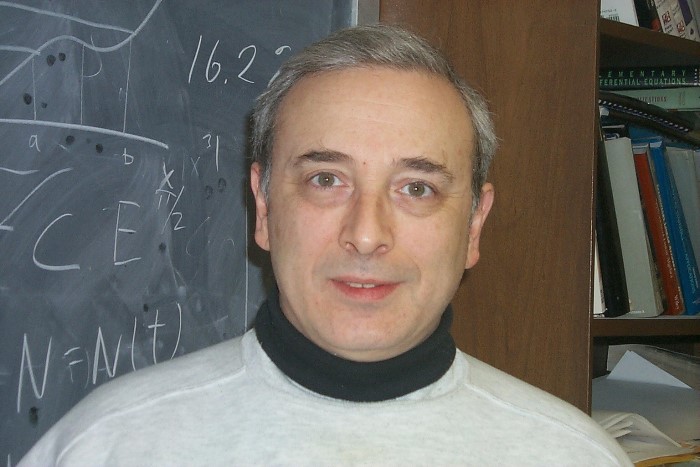
Michael Brin is one of the most respected mathematicians of the modern era, recognised for his exceptional contributions to dynamical systems, ergodic theory, differential geometry, and higher mathematics. While many people know him as the father of Google co-founder Sergey Brin, his own achievements stand on their own merit. His decades of academic research have influenced mathematicians across the world and helped shape the study of complex mathematical systems.
Throughout his distinguished career, Michael Brin combined deep theoretical knowledge with a passion for teaching and mentoring. His work has inspired countless students and researchers, while his commitment to mathematical excellence led to the creation of one of the field’s most prestigious awards.
Table of Contents
ToggleMichael Brin Early Life
Michael Brin was born on 20 September 1947 in Moscow, Soviet Union. He grew up in a family that valued education, science, and intellectual achievement. His parents encouraged curiosity from an early age, helping him develop a strong interest in mathematics.
Life in the Soviet Union presented many challenges, especially for Jewish families. Despite these difficulties, Michael excelled academically and demonstrated exceptional mathematical ability during his school years. His determination and talent allowed him to pursue advanced studies despite social and political obstacles.
Michael Brin Education
After completing his early education, Michael enrolled at Kharkiv State University, where he specialised in mathematics. His dedication led him to earn a Doctor of Philosophy (PhD) in mathematics in 1975. His doctoral research focused on advanced topics that later became the foundation of his influential academic career. His years as a student strengthened both his analytical thinking and research skills, preparing him for decades of mathematical discovery.
Michael Brin’s Move to the United States
Building a New Academic Career
In 1979, Michael and his family emigrated from the Soviet Union to the United States. The move opened new opportunities for research, teaching, and academic collaboration. Shortly after arriving, he joined the University of Maryland, where he became a professor in the Department of Mathematics. This marked the beginning of a long and highly successful academic career that would span more than four decades.
Michael Brin Academic Career
Michael spent the majority of his professional life at the University of Maryland. His teaching covered undergraduate and graduate mathematics, while his research attracted attention from scholars worldwide. Students respected him for his clear explanations, thoughtful guidance, and ability to simplify highly complex concepts.
Over the years, he supervised graduate students, collaborated with leading mathematicians, and published influential research papers. His office became a centre for mathematical discussion, where ideas were refined through careful reasoning and collaboration.
Michael Brin Research Contributions
The greatest contribution made by Michael Brin lies in the field of dynamical systems. Dynamical systems study how mathematical objects change over time. This branch of mathematics has applications in physics, engineering, economics, biology, and computer science.
His research advanced the understanding of:
Hyperbolic Dynamics
Hyperbolic systems describe mathematical models that remain stable even under small disturbances. Michael produced important theoretical work that improved understanding of these systems and their long-term behaviour.
Partially Hyperbolic Systems
One of his most recognised achievements involves partially hyperbolic dynamical systems. These systems contain both stable and unstable behaviours, making them especially difficult to analyse. His research provided powerful mathematical tools that remain valuable today.
Ergodic Theory
Ergodic theory investigates how systems evolve over long periods. Michael developed important ideas explaining statistical properties within complex systems. His work continues to influence mathematical research across many countries.
Differential Geometry
His research also extended into differential geometry, exploring curved spaces and geometric structures. These studies strengthened the relationship between geometry and dynamical systems, opening new directions for future research.
Michael Brin Publications
Throughout his academic career, Michael Brin authored numerous research papers published in respected mathematical journals.
Among his best-known works is the graduate textbook:
Introduction to Dynamical Systems
Written with mathematician Garrett Stuck, this textbook has become an important educational resource for university students studying advanced mathematics. The book explains sophisticated mathematical concepts with clarity and logical progression, making difficult topics more accessible. bIt continues to be used by universities across the world.
Michael Brin Prize
In 2008, Michael Brin established the Michael Brin Prize in Dynamical Systems. The award honours outstanding young mathematicians whose research has significantly advanced the field. Presented every two years, the prize has become one of the most respected distinctions in dynamical systems. By creating this award, Michael demonstrated his commitment to encouraging the next generation of mathematical talent.
Michael Brin as a Husband and Father
Michael Brin is married to Eugenia Brin, a respected researcher and scientist. Together they built a family that placed strong emphasis on education and curiosity. Their son, Sergey Brin, became one of the co-founders of Google and one of the world’s most influential technology entrepreneurs.
Although Sergey achieved remarkable success in technology, Michael established his own distinguished reputation decades earlier through mathematics. The family’s achievements reflect a shared appreciation for learning, innovation, and scientific excellence.
Michael Brin Teaching Philosophy
Inspiring Future Mathematicians
Beyond research, Michael earned admiration for his dedication to teaching. He believed mathematics should develop logical thinking rather than simple memorisation. Students appreciated his patience and willingness to discuss difficult problems in detail.
Many of his former students later became respected professors and researchers, extending his influence far beyond his own publications. His classroom encouraged careful reasoning, independent thought, and intellectual curiosity.
Michael Brin’s Influence on Mathematics
Lasting Academic Impact
The influence of Michael reaches far beyond his own research.
His theoretical discoveries continue to support ongoing work in:
- Geometry
- Chaos theory
- Dynamical systems
- Ergodic theory
- Mathematical physics
- Advanced analysis
Researchers continue building upon ideas first developed through his work. Many university courses reference concepts that he helped establish, demonstrating the lasting importance of his contributions.
Michael Brin Awards and Recognition
Honours Earned by Michael Brin
Although mathematicians often receive less public attention than figures in entertainment or business, Michael has earned widespread respect within academic circles.
His recognition comes through:
Academic Reputation
His publications remain highly regarded by researchers worldwide.
International Collaborations
He worked alongside distinguished mathematicians from numerous universities and research institutions.
Lasting Educational Influence
His textbook continues educating graduate students, while the Michael Prize supports future leaders in mathematics. These achievements highlight a career built upon scholarship, integrity, and intellectual excellence.
Michael Brin Retirement
Continuing Legacy
After many productive years at the University of Maryland, Michael Brin retired from full-time teaching. Retirement marked the conclusion of an extraordinary academic career rather than the end of his influence. His research remains widely studied, while the mathematical community continues recognising his contributions through conferences, publications, and the prize established in his name. His ideas continue shaping new discoveries made by younger generations of mathematicians.
Facts Worth Knowing
Michael Brin was born in Moscow.
He spent his early years in the Soviet Union before moving to the United States.
Michael Brin specialised in dynamical systems.
This field became the central focus of his life’s work.
Michael Brin taught for decades.
His long career at the University of Maryland influenced thousands of students.
Michael Brin authored a respected textbook.
Introduction to Dynamical Systems remains an important graduate-level reference.
Michael Brin established an international mathematics prize.
The Michael Brin Prize celebrates exceptional achievements by young researchers.
Michael Brin is the father of Sergey Brin.
Both father and son have made significant contributions within their own fields.
Michael Brin Legacy
Why Michael Brin Matters Today
Michael Brin represents the highest standards of academic excellence. His research transformed the understanding of dynamical systems, while his teaching inspired generations of mathematicians. Through his publications, mentorship, and the establishment of an internationally recognised prize, he created a lasting foundation for future mathematical discovery.
Although many recognise his family connection to one of the technology industry’s leading innovators, Michael Brin’s own accomplishments have secured his place among the most influential mathematicians of his generation.
His life’s work demonstrates how dedication to knowledge, rigorous thinking, and a commitment to education can produce an enduring impact. Today, his theories continue guiding research, his textbook remains a trusted educational resource, and his legacy lives on through the many scholars whose work has been shaped by his remarkable contributions to mathematics.